


This content is originally published in Daily Guardian, December 15, 2025 issue and online in their website.
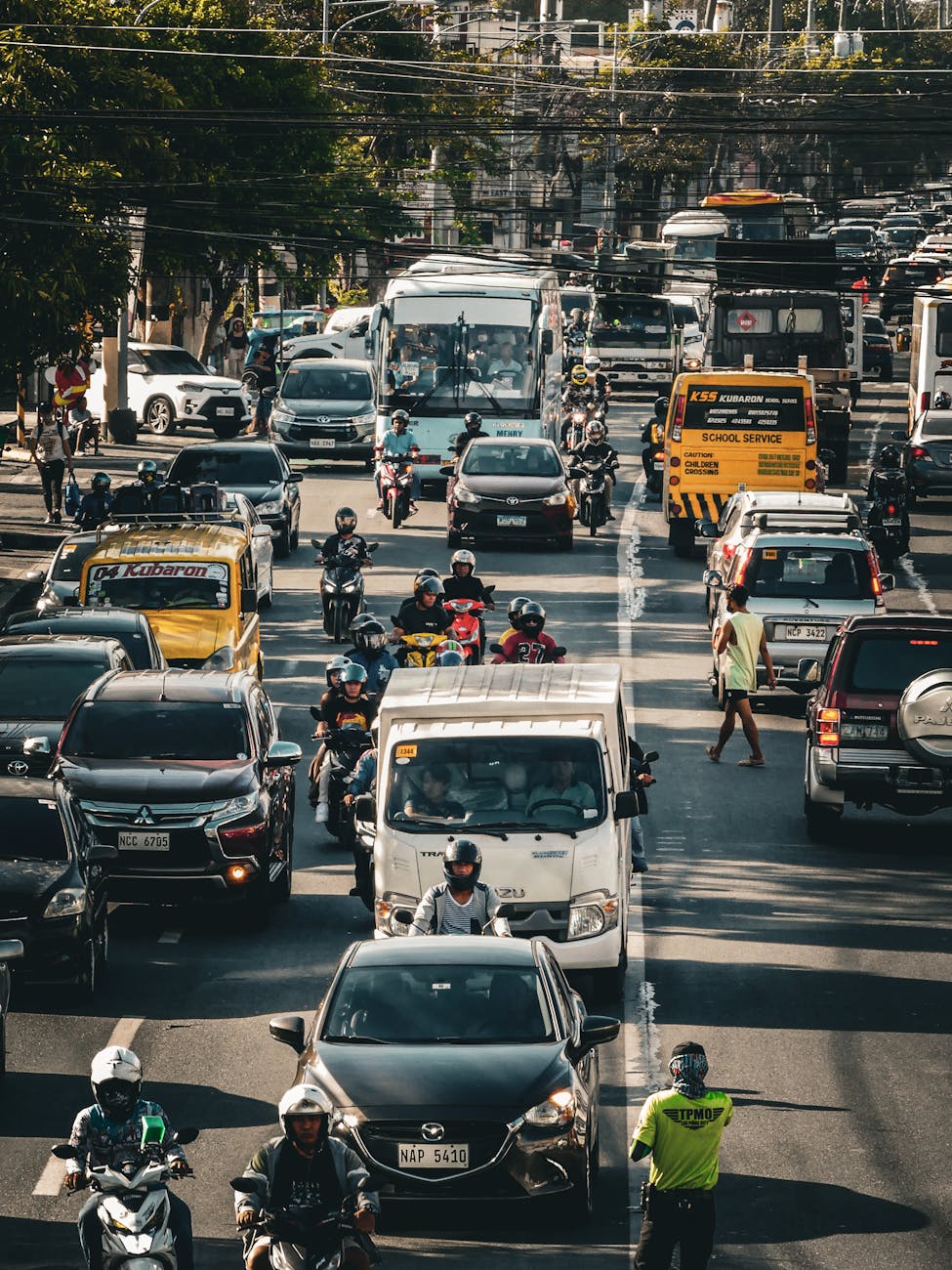
It is no longer surprising that Epifanio Delos Santos Avenue (EDSA) continues to suffer from some of the worst traffic jams in the country, especially during the Christmas season. A decade ago, this was already the problem. Yet today, the Metropolitan Manila Development Authority (MMDA) still points to the same culprit: mall-wide sales.
Back then, the government responded by extending mall operating hours. It was a practical move that helped ease traffic flow. Malls complied, and for a time, the strategy worked. But ten years later, the situation has changed. The number of registered vehicles has ballooned from 8.7 million in 2015 to 11.7 million in 2023, and the transportation system has barely improved. Simply stretching mall hours is no longer enough.
Metro Manila is composed of 16 cities and one municipality, each with its own traffic management strategies. The MMDA plays a central role in coordinating traffic across these local government units. One of its flagship programs is the Unified Vehicular Volume Reduction Program, commonly known as coding, which restricts vehicles based on the last digit of their license plates. EDSA, the backbone of Metro Manila’s road network, cuts through six cities: Pasay, Makati, Mandaluyong, San Juan, Quezon City, and Caloocan. Along this stretch stand some of the country’s largest malls.
The problem is not just the holiday rush or the sales. It is the failure to anticipate demand and the continued reliance on car-centric solutions. Public transportation is being promoted, but it remains unreliable.
Metro Iloilo faces similar challenges, although on a smaller scale. Diversion Road, officially Senator Benigno S. Aquino Avenue, connects Iloilo City, Pavia, and Sta. Barbara. It serves as a vital corridor to commercial hubs such as Ayala, Gaisano, SM, Megaworld, Robinsons, CityMall, and GT Mall.
The key difference lies in the concentration of shopping destinations. In Metro Manila, malls are spread across multiple cities along EDSA. In Metro Iloilo, they are mostly concentrated in Iloilo City. This funnels traffic into the city during peak seasons, especially the holidays. While Metro Manila’s mall distribution spreads the load, its road capacity is already overwhelmed. Congestion there is no longer seasonal, it is permanent.
This contrast offers both a lesson and a warning. The problem is not just the holiday rush or the sales. It is the failure to anticipate demand and the continued reliance on car-centric solutions. Public transportation is being promoted, but it remains unreliable. For many Filipinos, it is not a choice but a daily ordeal. Authorities cannot simply encourage its use without ensuring it is safe, efficient, and accessible.
Another advantage for Metro Iloilo is coordination. With fewer local government units involved, traffic management decisions can be made faster and implemented more effectively. In Metro Manila, each city is a vortex of traffic, and EDSA connects them all. This complexity makes unified action difficult.
Metro Iloilo has a chance to learn from Metro Manila’s experience. As it develops its own metro-wide transportation systems, it must avoid the pitfalls of fragmented planning and car-first policies. Traffic analysis should go beyond counting vehicles and parking spaces. It must consider the actual trips people make and how public transport can serve them better.
The stakes are high. In 2015, the National Economic and Development Authority, present-day Department of Economy, Planning, and Development, estimated that traffic congestion cost the economy PHP3.0 billion per day, or about 0.8 percent of GDP. Without intervention, the Japan International Cooperation Agency projected this could reach PHP6.0 billion daily, or PHP2.2 trillion annually, by 2030. While consumer spending rises during the holidays, these gains may be wiped out by the economic losses caused by gridlock. Metro Iloilo is not yet in the same position as Metro Manila. It does not face the same enforcement challenges or infrastructure constraints. But the threat of worsening congestion is real. If left unaddressed, it could stall the metro’s economic momentum. The time to act is now, before the problem becomes permanent.
 Ilonggo Engineer
Leave a comment