
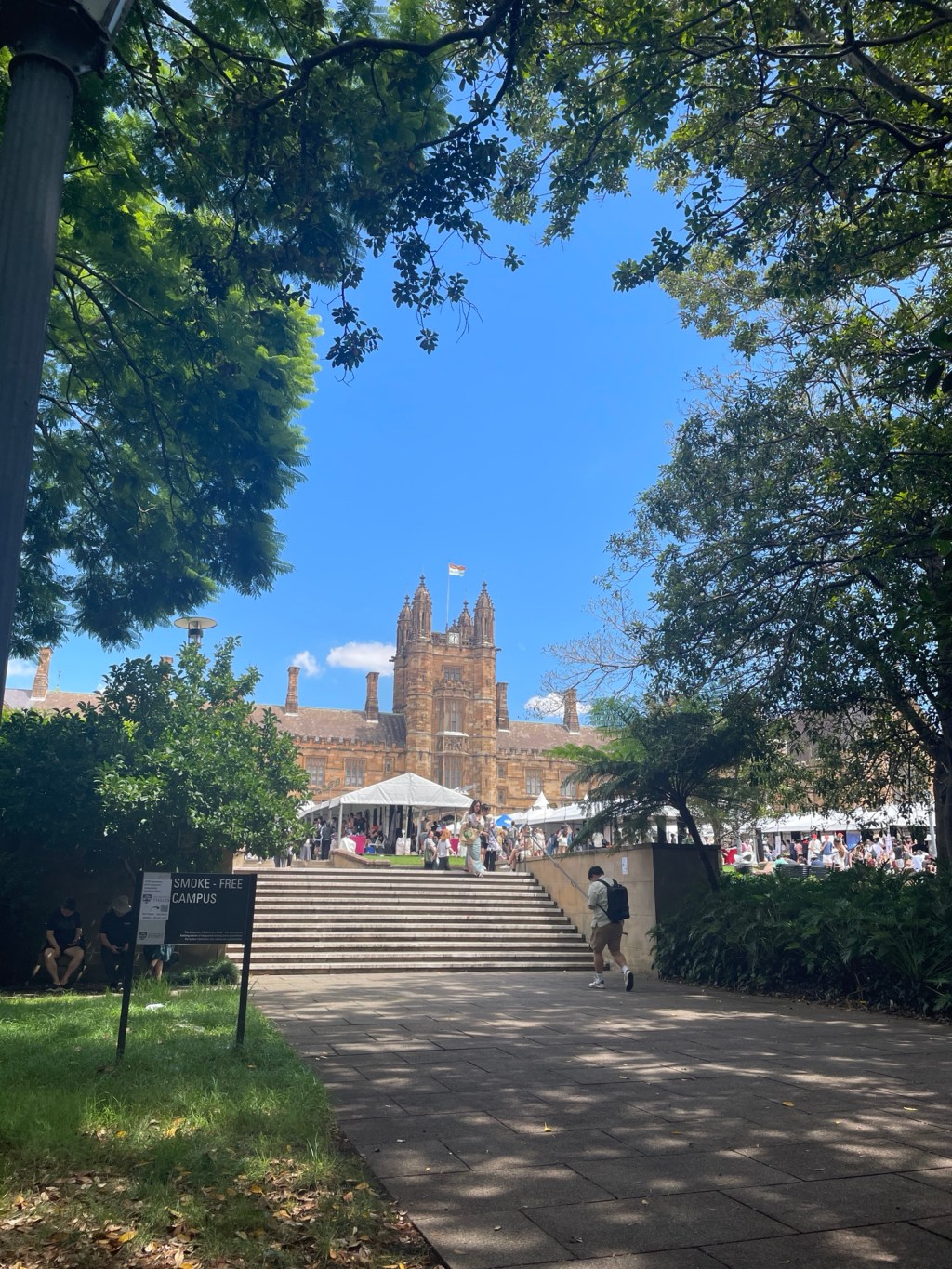

As someone who grew up in a developing country, and not even in the most developed city in that country, I find it very far to be able to study a postgraduate degree abroad. However, it has always been something I daydream about. I am surrounded by ideas from Western films about what life could be like if I was living alone, studying, and working. The latter to be honest was a bit difficult for me and the situation I am in and I’ll save the details for later. I am studying under a fully-funded scholarship program in Australia and the life for almost a year has already become so rewarding (based on my own personal criteria). I feel adjusted and I feel in control of things. Sometimes, though, it can be really overwhelming and people don’t usually talk about this. While it is quite a long story to tell, I will share some expectations that you should be ready when you venture into studying abroad and not just any university, I’m talking about a university considered as one of the best in the world.
Before anything else and the benefit of non-Filipino readers, I want to put into context that I come from the Philippines. Our primary, mandatory education was six years of elementary school and four years of high school. Then, we proceed to college (or university) to do an undergraduate degree. I had mine done in five years for civil engineering. I also completed a master’s degree also in civil engineering which had a duration of two years. At present, Filipino students have to undergo 12 years of mandatory primary education which is inclusive of six years of elementary school, four years of junior high school, and two more years for specialized senior high school where students can choose a wide variety of tracks such as accounting and business management, humanities and social sciences, and the most popular (well for me), science, technology, and mathematics. There are also tracks which lead to technical and vocational education which can serve as pathways for skilled workers who do not wish to continue to tertiary level.
I am studying at the University of Sydney and as of this writing (2024) it is 18th in the world based on the QS University Rankings. My degree which is Master of Transport is 10th in the world based on the Shanghai Ranking.
Don’t be misled by the hours in class
In Australia, particularly in this university, a full study load is usually 18 to 24 credit points equivalent to three to four units of study (subjects as we call it in the Philippines). I assumed that having 12 hours of combined hours for class means I have more free time. I was wrong. This means that I have 28 more hours to spend on independent study. These units of study equate to 10 hours per week more or less of student effort for each. So if you have four units of study, that is 40 hours of student effort.
Don’t get me wrong but I feel like from my experience, attending classes and doing one or two hours of assignments felt enough in the Philippines. Here in Australia, I literally spend hours to study (and to overthink my situation) and call it a day at 2 or 3:00AM on better days and far later as 5:00AM when things are really behind.
Thus, it is a wise decision to make use of the calendar of your phone. C’mon, make that iPhone more useful than just a flex. I establish blocks of time dedicated for specific tasks and try to follow them as strictly as possible. Otherwise, an unproductive time lost will densify the pressure when deadlines are on the horizon (and are getting closer by the hour).
Professors are here to help you, not torment you
I can freshly recall those memes about thesis defense wherein students literally defend themselves from the grueling ego of some panelists. That is perfectly understandable (no not exactly). I am very lucky to have not experienced life and death situations because of professors who inflict a thousand cuts to your self worth during thesis defense or simply in class. I hear more of these stories in the Philippines than here in Australia (or I don’t know, maybe luck is still with me).
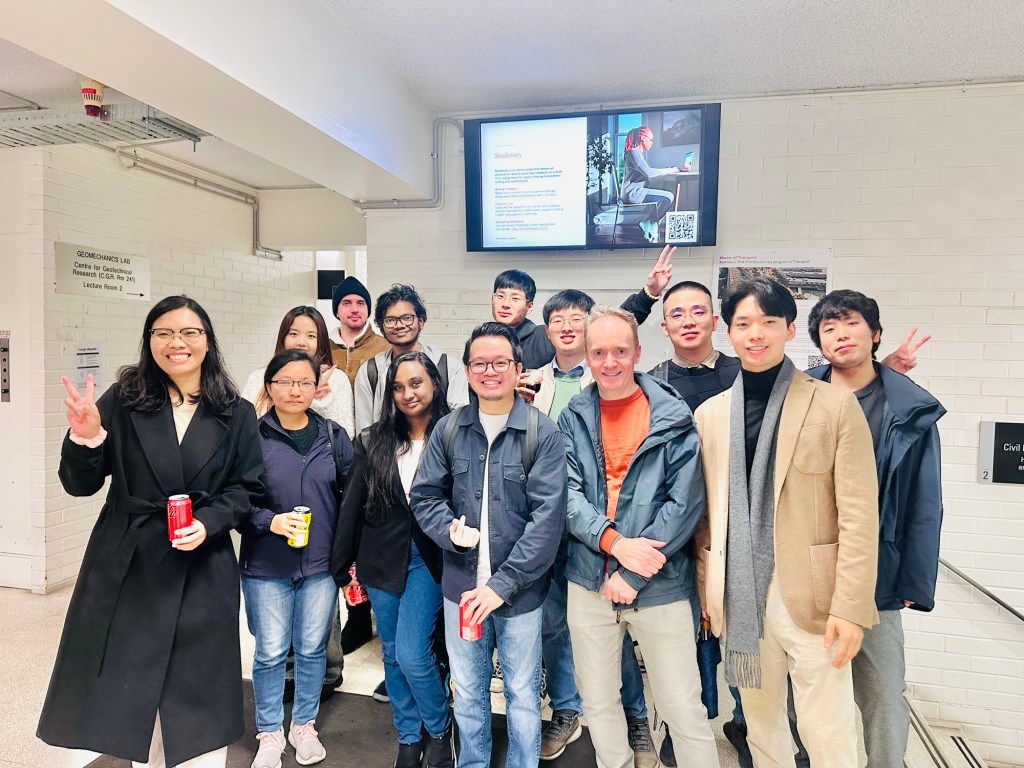
My professors come from various places. I have a rockstar professor from the Netherlands who has over 10,000 citations yet is very modest and approachable. I really look up to him. I have a legendary professor from the United States who has over 21,000 citations whose teaching methods go beyond. We literally jumped from playing a board game, to role playing as an organizational representative to lobby transport policies.

I study under the research pathway of my degree and I am fortunate to have two research supervisors, one who comes from England who I admire and I believe gives the right amount of support and encouragement for a research student, and the rockstar professor I mentioned.
They are so approachable and not entitled. I can freely approach them and I can be honest about my struggles be it academically or career decisions. To be honest, I have become more passionate in my studies because of them, and the rest of the professors I have in the University of Sydney. It simply allowed me to experience what real academia is all about. I am also grateful to the past institutions I have been but here, it’s a whole different level in terms of experience.
Living is independence in all levels
I am fortunate to be living alone in a university-managed accommodation and since I am a scholar, there is minimal need to really look for money to support my daily needs. However, the cost of living is still something I have to admit requires a strict financial management skill. For one, I cook my own food to ensure I spend less since restaurant food is expensive.
I also got sick once in a while and there is no family member who can be there to take care of me. I mean I also have some friends but I think it is not their responsibility to meet the level of care I need. So I experienced sweltering fever and still managing to get up and cook my own food or I’ll starve to death. LOL. I rationalized my energy to brave going out and purchase over-the-counter medicine or send myself to a GP (general practitioner, that’s what they call their doctors here). I still find it really disappointing that doctor appointments here take over a week to two weeks. Literally, you just outgrow your illness before heading to your doctor’s appointment.
I know this article is about academics, but living expectations also needs to be put in the equation. Not to mention, mental health is really important. Thus, be sure to have a balance between studies and also living the life. I occasionally travel to get some breathers. I sometimes go to the parks, or to my favorite spot in the Sydney Harbour where I just take some quiet period and eat some snacks I brought with me.
You can do it

Studying may be demanding and “a living hell” at times, but remember it is the finish line (completing your degree) that is the most important. The mindset has to be there. You managed to enter the university, it means you can manage to finish it. I wrote this article to commemorate my first year in Sydney and as a reflection of the things I had to go through surviving this and making myself proud. I mean I only imagined this to happen, like a daydream. And now, it’s been a year. I am very excited to complete my degree at the end of the year and come home to make a difference.


Leave a comment