


This content is originally published in Daily Guardian, November 17, 2025 issue and online in their website.
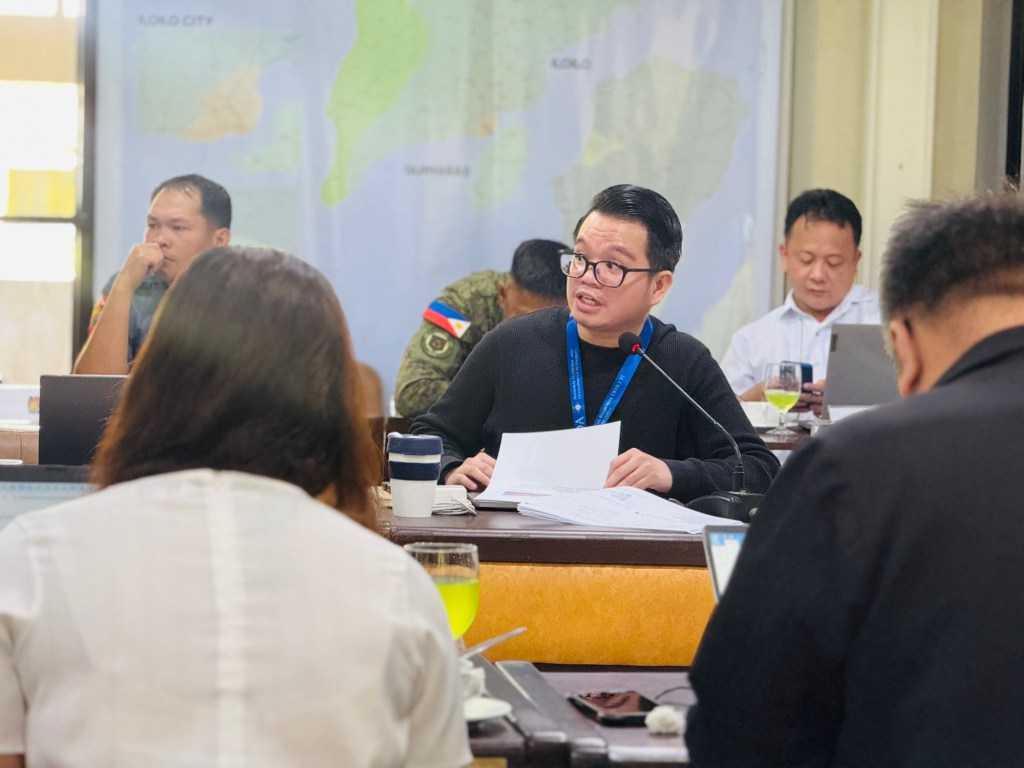
On three consecutive days, just prior to the National Day of Remembrance of Road Traffic Victims, Survivors, and Families, the draft Western Visayas Road Safety Action Plan (WVRSAP) 2026-2028 was officially released. The Department of Economy, Planning, and Development VI, in collaboration with the Department of Health Western Visayas Center for Health Development, conducted the release of the draft WVRSAP in three distinct events: the Regional Steering Committee for the Sustainable Development Goals (SDGs) Annual Meeting, the Road Safety Summit, and the Biannual Road Safety Meeting, which took place last week.
The WVRSAP needs that much attention. After all, it is the first time that road safety has been taken through a development and sustainable mobility lens, unlike the traditional transportation point-of-view. Being part of the team behind this groundbreaking approach, we are striking a balance between the already overwhelming priorities of the government while at the same time ensuring outcomes of reducing road crash fatalities and injuries are at the heart of our regional development priorities.
To put into context, the region has 8.66 deaths per 100,000 population. This translates to at least one person dying each day on our roads. This is slightly higher than the 2020 World Health Organization country-report which is at 7.8 deaths per 100,000 population.
The region’s road safety intervention blueprint is based on specific, measurable, achievable, relevant, and time-bound indicators. It emanated from two consultations involving at least 200 people and an expert validation workshop. During the planning process, several gaps were identified that could not be addressed within the three-year timeframe. These gaps include the need to update standards, review policies, and establish legal bases for funding interventions. Nevertheless, with experts collaborating with stakeholders from diverse backgrounds, the foundation for this change is already embedded within the plan.
The plan encompasses six focus areas that integrate global and national pillars, adopting a glocal approach. The foundation of these six focus areas is Road Safety Management, which will involve coordinated and collaborative mechanisms for planning, programming, monitoring, evaluation, and learning. A significant achievement in this area is the establishment of the country’s first interagency road safety observatory. Safe Road Infrastructure is another focus area where the prioritization of safety will be enhanced by integrating protective features into road design and maintenance. Safe Vehicles will address longstanding challenges in vehicle safety standards compliance. For Safe Road Use, behavior change will be the core focus, ensuring accountability is mainstreamed across road users. Reinforcement of road safety education, speed management, enforcement capacity, and community-led awareness and training will be undertaken to cultivate a better road safety mindset among all stakeholders. Trauma care capability will be at the core of Post-Crash Response, along with mechanisms to strengthen crash response systems, enhance legal protection for lay responders, and ensure social assistance for bereaved families and survivors. Lastly, adopting the global pillar on Multimodal Transport and Land Use Planning, emerging resilient urban planning trends, public transportation, and healthy and sustainable mobility options will be promoted for use in Local Government Units (LGUs).
The region’s road safety intervention blueprint is based on specific, measurable, achievable, relevant, and time-bound indicators. It emanated from two consultations involving at least 200 people and an expert validation workshop.
The plan is not isolated. It is aligned with regional development priorities such as the Western Visayas Regional Development Plan, the Philippine Road Safety Action Plan, and the SDGs. This approach acknowledges the mere fact that plans and priorities are interconnected. Gender equality and reducing inequalities, for example, are two SDGs the WVRSAP can contribute on by capacitating LGUs on transport plan preparation, building bicycle lanes in town centers, and building safe learning environments. These interventions lead to having inclusive and socially-equitable mobility in the region.
The WVRSAP will undergo final review by the public to ensure that everyone has a say on the region’s plans. These next few weeks, focus areas will be taken up in the sector committees of the Regional Development Council VI to make sure priorities are not missed out and to gather momentum and commitment among its members. And then by December, the plan will be taken up and approved by the council. The success, however, still lies on the collective efforts of stakeholders. Government entities must endeavor to include road safety-related programs, projects, and activities in their priorities. Policymakers must take the necessary steps to advance the legislative agenda set forth in the plan. And all of us, Western Visayans, must keep the road safety conversation going and be the watchful eye that sees to it everybody does their part. This includes us, of course, by doing simple things like road courtesy and wearing of seatbelts.
 Ilonggo Engineer
Leave a comment