

Two weeks ago, the world marked the United Nations Global Road Safety Week. Here in the Philippines, the entire month of May is recognized as National Road Safety Month. These observances remind us that road safety is not only about traffic rules. It is a matter of life and death, shaped by how we design and manage our communities.
Personally, this month, so far, has been a whirlwind in the best way. I was interviewed by a Hong Kong based newspaper and helped launch the Ligtas na Kalsada for All (LinK4All) Project, an initiative that is very close to my heart. These moments, while overwhelming, have renewed my hope. As a young advocate, I see growing momentum from both government and private stakeholders to confront the deeper issues that make our roads unsafe.
The UN Global Plan for Road Safety outlines five areas of action: safe road use, road infrastructure, vehicles, post crash response, and one that is new and overlooked is multimodal transport and land use planning. At first glance, connecting land use to road crashes may seem unclear. But my research professor once pointed out that some people believe that many tragedies happen simply because people are in the wrong place at the wrong time. We built wrong places, and the timing may be wrong but things can be done to prevent devastation.
Through my work in both urban and rural areas, I have seen how our built environment was not designed with people in mind. It was built around vehicles. In many rural communities, students must walk over an hour to get to school. With no access to safer alternatives, they often turn to motorcycles, frequently unlicensed and without helmets, because that is all they can afford. I remember one heartbreaking story of a woman who lost her pregnancy because the nearest clinic was simply too far.
In cities, chaotic and car-centered road systems lead to deadly consequences. Pedestrians and cyclists are treated as obstructions, not as part of the transportation system. These are not isolated design flaws. They are the result of long-standing decisions that prioritized speed and convenience for cars over safety for people. The good news is that we are beginning to recognize this, and change is starting.
Communities should be designed so that work, school, markets, and social activities are within walking or cycling distance.
The UN recommends compact urban design and development centered around public transit. It urges us to prioritize pedestrians, cyclists, and public transport users. It calls for better zoning policies that support affordable and accessible housing, and incentives that shift our dependence away from private vehicles. These are not abstract ideals. They are practical strategies that save lives.
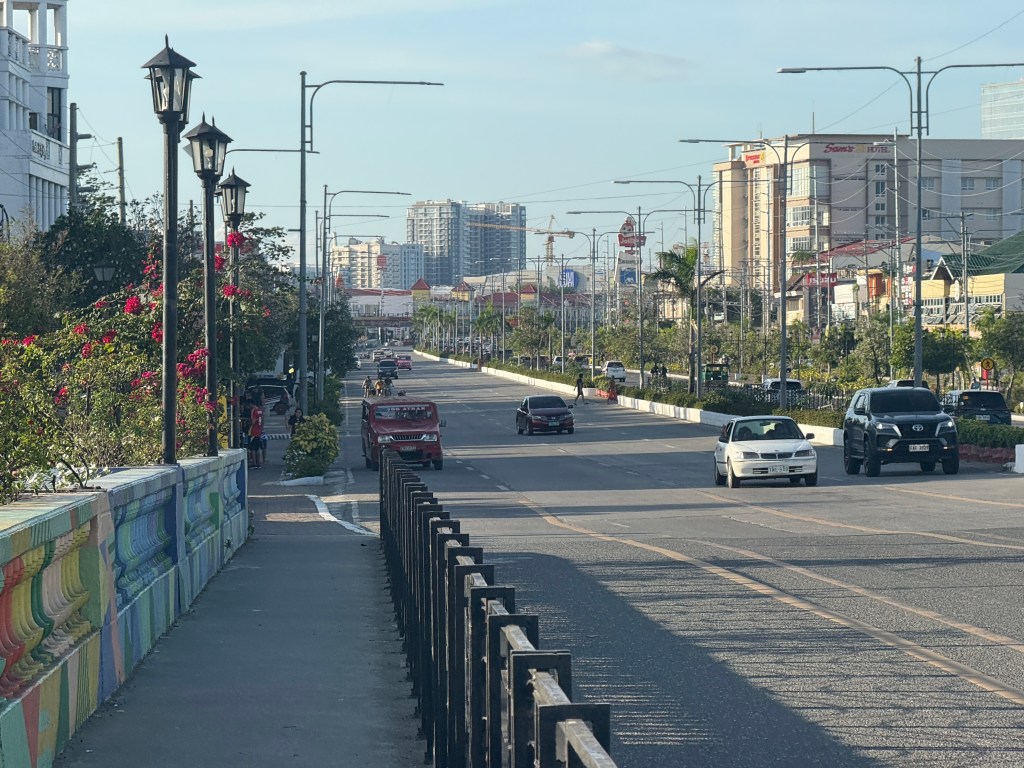
Take Iloilo City, for example. With its growing population, it is crucial to invest in pedestrian friendly infrastructure and reduce dependence on cars. Safe, reliable, and comfortable public transportation must be part of the solution. Communities should be designed so that work, school, markets, and social activities are within walking or cycling distance. In places where pedestrian activity is already high and relocation or reconfiguration is next to impossible, lowering speed limits and building protective barriers can prevent fatalities and injuries without sacrificing accessibility or aesthetics.
Rural areas are in a unique position to learn from the mistakes of urban centers. Now is the time for them to incorporate these lessons into their comprehensive land use plans. These plans must be backed by real investment in infrastructure, as well as strong political will to strictly implementing zoning ordinances. At its core, road safety is not just about what we do at intersections. It is about reimagining how we build and live in our communities. It is time we design roads not just for vehicles, but for people. Multimodal transport and land use planning is one of the key areas of focus. The shift is already underway and it deserves all our support, commitment, and cooperation.

This content is originally published in Daily Guardian, May 19, 2025 issue and online in their website.
 Ilonggo Engineer
Leave a comment