


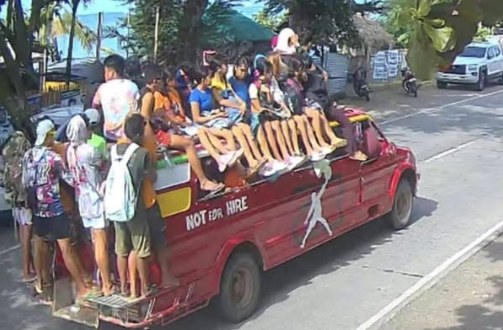
For some people, the Holy Week is a time of reflection, a time to reconnect with their faith. But for some, it was their final moment. This was the case for three people who lost their lives in the brutal road crash in Bacolod City. A private vehicle rammed into a solemn procession on Good Friday, where devotees were caught off guard. In a separate incident, what was supposed to be a moment of fun and relaxation turned into a nightmare in broad daylight. A large group on board a private jeepney, with almost half of them minors, figured in a crash in Miagao, Iloilo. In a photo that circulated online, it was clearly overloaded with people on the roof of the jeepney and on its tail end. It was a tragedy waiting to happen. And fortunately, nobody lost their lives. However, its victims will relive the moment that they almost did.
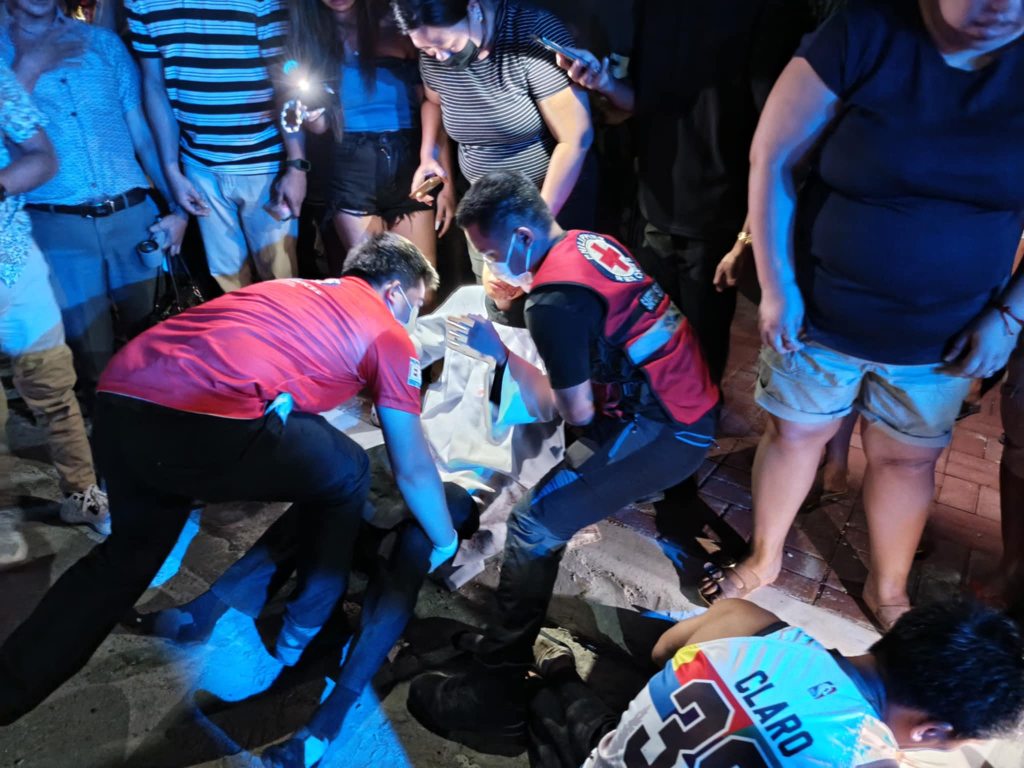
People, as always, were quick to react online. This is perfectly understandable as there is frustration. The blame game was on. In the Bacolod City crash, some people became so tense that even faith was put on the line. Some correctly guessed that the driver was driving under the influence of alcohol. The Land Transportation Office confirms this. Meanwhile for the Miagao crash, it was prima facie that people’s lives are in danger. A jeepney was carrying more than it should, and people had extra vulnerability as it is never safe to sit on the roof or hang at any part outside of a moving vehicle.
In a meeting I attended recently, the traditional 3Es in road safety, education, enforcement, and engineering was brough up by one of the attendees. This concept was not new to me as this was also part of a training I got to join when I was still starting my career at the Department of Public Works and Highways. While it is now 2025, the 3Es were a simple triangle presented by Kansas City Safety Council in 1923. In the Handbook of Traffic Psychology (2011), the 3Es have extended to more Es, it also included exposure, examination of competence, emergency response, and evaluation.
Exposure emphasizes the need to understand who is most at risk, under what conditions, and how we can prevent injuries through better preparation and safer environments. It also highlights who drives, at what time, at which place, and with whom. Such is the case for the incident in Miagao where half of the demographics are young people and the unsafe choices of travelling.
Examination of competence, meanwhile, lies on the licensing standards and driver testing. Drivers should have the best knowledge of safety within and outside of their vehicle. The driver must know if the vehicle is overloaded and if all passengers are wearing the necessary seatbelts or safety equipment. They should also know that speed must be managed. And outside of their vehicle, it is imperative that in populated settings, vehicles are the ultimate hazard, not the surroundings or the people around it. It is upsetting that there are drivers who believe that the bigger their vehicles are, the more rights they have. These drivers abuse the privilege of driving. While freedom of movement is a basic right, the act of operating a vehicle comes with responsibilities that must be earned and upheld.
While freedom of movement is a basic right, the act of operating a vehicle comes with responsibilities that must be earned and upheld.
Emergency response is also included and is a vital component that could sometimes mean life or death. Empirical evidence suggests that faster medical response save lives but the most critical elements are early detection, onsite stabilization of vitals of the victim, and rapid transport to trauma centers. As of 2021 records of the Department of Health, Western Visayas Medical Center in Iloilo City is the sole DOH trauma center of the region, while in Negros Island Region, they have Corazon Locsin Montelibano Memorial Regional Hospital in Bacolod City. This shows that in serious crashes from farther places, the less likely you survive.
And finally, evaluation is the most critical E for ensuring road safety interventions work. This requires the extensive detailing of road crash data. While there is a road crash data presented in many of the meetings I attended, these are purely demographic and simply the numbers. The tragedies in Bacolod and Miagao show that our current road safety efforts are not enough. Despite knowing what works, from proper driver assessment to effective emergency response and meaningful evaluation, we continue to fall short. These are not just accidents; they are preventable failures. It is time we treat road safety as a serious responsibility led by experts, not as an afterthought.

This content is originally published in Daily Guardian, April 21, 2025 issue and online in their website.
 Ilonggo Engineer
Leave a comment